
Attic Insulation in Brewton, AL
On a July afternoon, the air trapped above a Brewton ceiling can climb well past 130 degrees. Everything in that space radiates heat downward, and the only thing standing between it and the bedrooms is whatever sits on the attic floor. When that layer is thin, settled, or missing in spots, the air conditioner fights a losing battle until sundown. Flores Foam Insulation upgrades attic insulation in Brewton homes using spray foam or fiberglass, depending on how the attic is built and used.
Two Ways to Insulate an Attic
There are two basic approaches, and the choice shapes everything else about the project.
Insulating the Attic Floor
This is the traditional method. Insulation goes between and over the ceiling joists, and the attic above stays vented to the outdoors through soffit and ridge vents. The attic itself remains hot in summer, but the living space below is shielded from it. Fiberglass is the usual material here, and fiberglass insulation for Brewton homes covers how it is fitted.
Sealing the Roofline
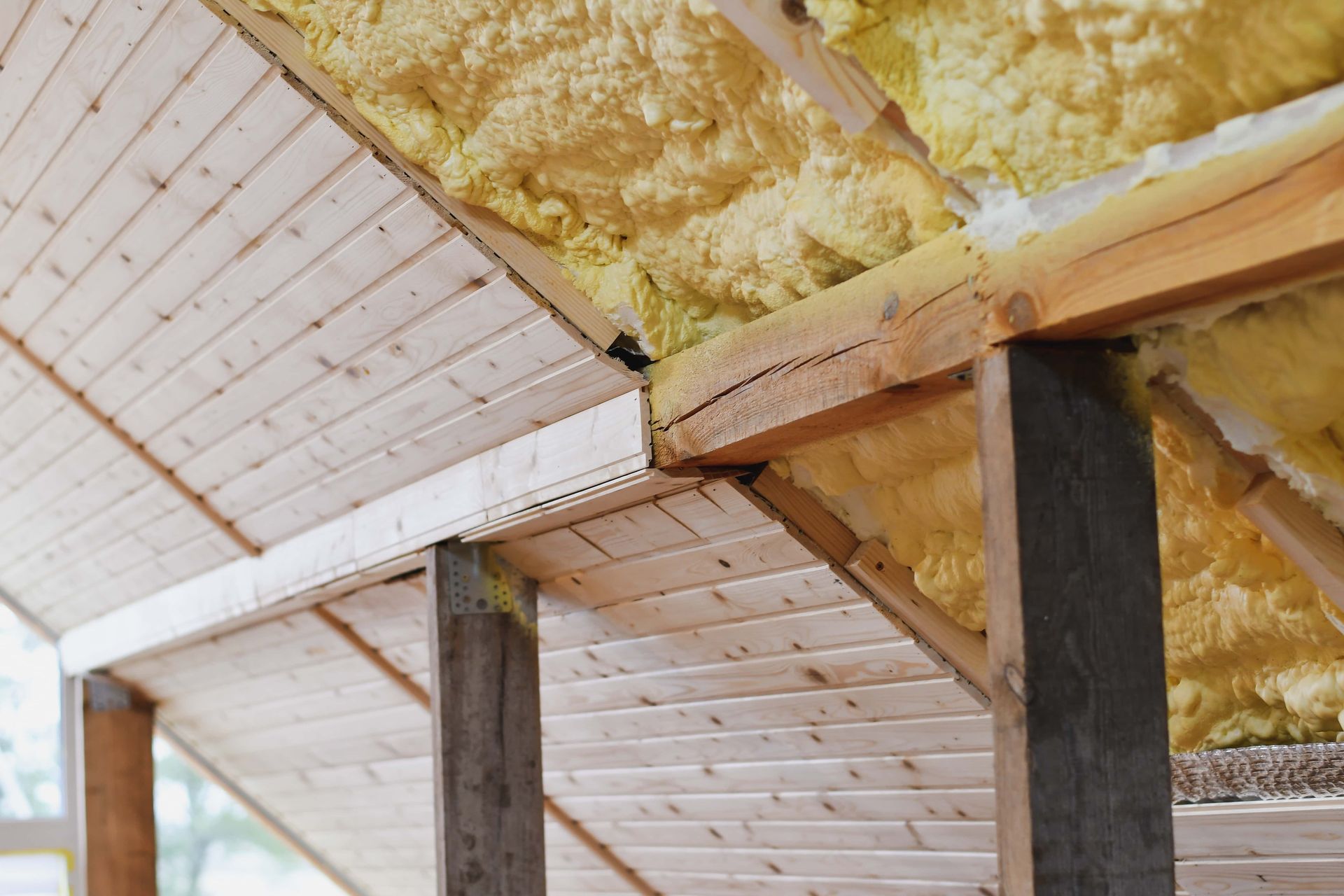
The other approach moves the insulation up to the underside of the roof deck. With the vents closed off and foam applied to the rafters and sheathing, the attic becomes part of the conditioned space, running close to the temperature of the house. This is where spray foam insulation comes in, since it seals and insulates the irregular roof surface in a single layer.
Why Ductwork Changes the Math
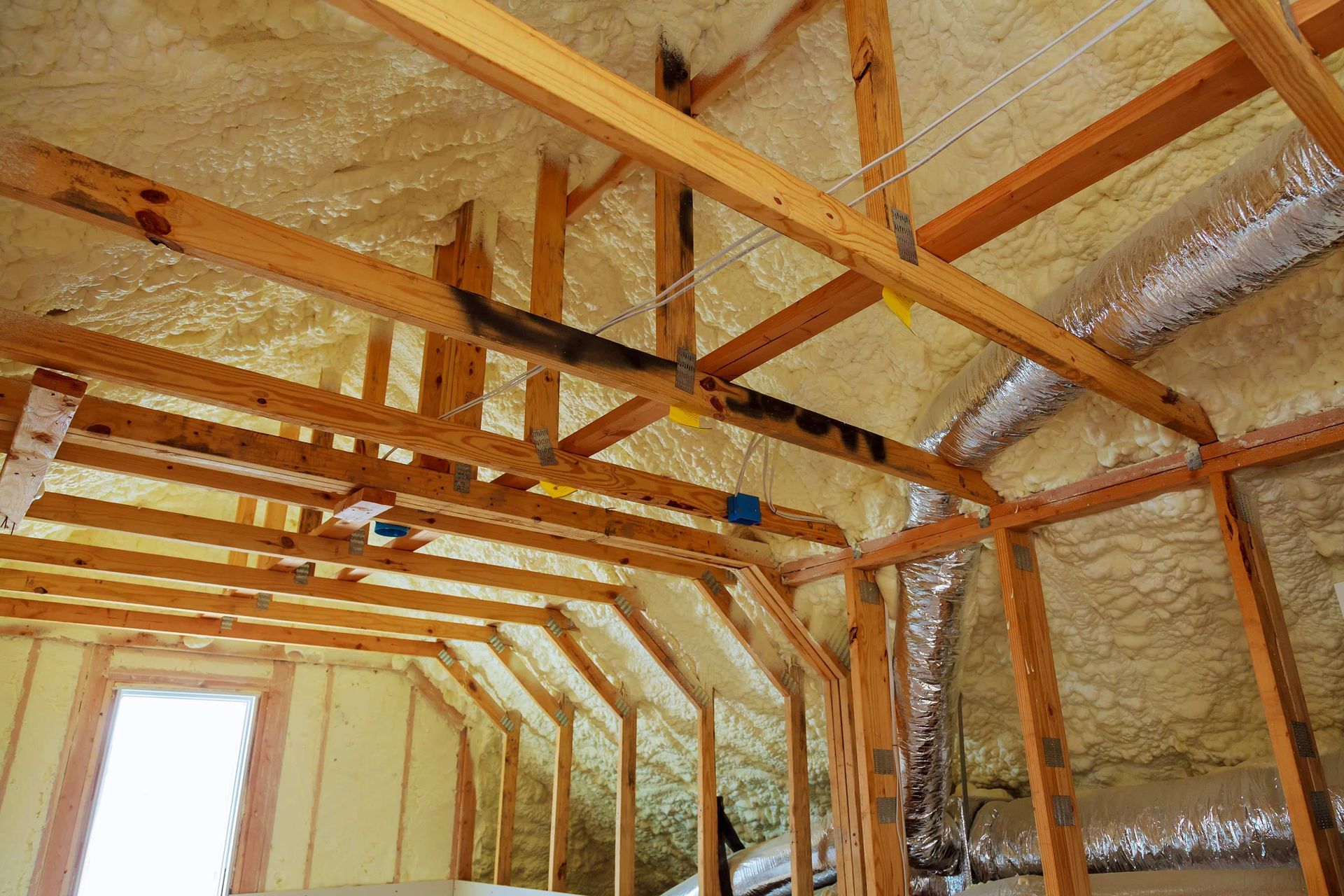
In many homes across south Alabama, the air handler and duct runs sit in the attic. In a vented attic, that equipment spends the summer surrounded by the hottest air on the property. Cool air loses some of its chill on the way to each vent, and any leaky joint in the ducts dumps conditioned air into the attic.
Sealing the roofline brings that equipment inside the insulated envelope. For homes with ducts overhead, that difference is often the deciding factor between the two approaches. For homes with ducts in a crawl space or no attic equipment at all, insulating the floor of the attic is usually the simpler path.
What a Good Attic Job Includes
Depth and coverage come first. Insulation should run continuously across the whole attic floor, including the hard-to-reach corners near the eaves where low roof pitch makes crawling difficult. Those edges are where coverage most often falls short.
Air sealing comes before insulation on a floor install. Holes around recessed lights, plumbing vents, wiring, and the attic hatch let warm, humid air move between the attic and the house, and insulation laid over those gaps will not stop it.
Ventilation has to stay open. At the eaves, insulation cannot be allowed to block the soffit vents, or the attic loses its airflow. Existing damaged material is also dealt with before new insulation goes down, and
old fiberglass removal explains when that step is needed.
Attics Around Brewton
Attic work is available throughout Brewton and in Pollard, Castleberry, and Century, FL. Low-slope roofs, older homes with original insulation, and houses with ductwork overhead are common across the area, and each points toward a slightly different solution.
Attic Insulation Questions
How much insulation does an attic in south Alabama need?
The U.S. Department of Energy recommends R-30 to R-60 for attics in this part of the country. Many older homes fall well short of that, either because they were built under looser standards or because the original insulation has settled over time.
How can I check my current attic insulation?
Look across the attic floor from the hatch. If the tops of the ceiling joists are visible, the insulation is no deeper than the joists themselves, which is typically 3.5 to 5.5 inches. That usually means there is room to add more.
What are baffles, and does my attic need them?
Baffles are channels installed between the rafters at the eaves. They hold insulation back from the soffit vents so outside air can still flow up under the roof deck. A vented attic with insulation pushed against the eaves needs them to keep air moving.
Can a sealed attic still use the existing vents?
No. When the roofline is sealed with foam, the soffit and ridge vents are closed off, because the goal is to keep outside air out of the attic entirely. Mixing the two approaches, with foam on the roof deck and open vents, works against both.
Does attic insulation help in winter too?
Yes. Heat rises, so the attic is also where warmth escapes during cold snaps. The same layer that blocks summer heat holds furnace or heat pump warmth inside on winter nights.